
Bantam Classics
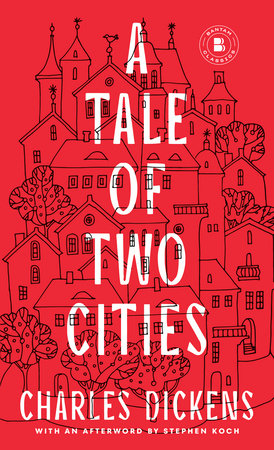
A Tale of Two Cities by Dickens, Charles
A Tale of Two Cities by Dickens, Charles
44 in stock
Couldn't load pickup availability
"It was the best of times, it was the worst of times. . . ."
So begins Charles Dickens' A Tale of Two Cities, a masterful pageant of idealism, love, and adventure during the French Revolution. After nearly two decades, Lucie Manette's father is released from his unjust imprisonment in the Bastille. The two relocate to London and meet Charles Darnay, a French aristocrat, and Sidney Carton, an English lawyer. Both men are smitten with the gorgeous Lucie, and she eventually weds Charles. But once the French Revolution breaks out, Charles faces execution--and Sidney faces a life-changing decision. With his sublime parting words, "It is a far, far better thing that I do, than I have ever done . . .," Sidney Carton joins that exalted group of Dickensian characters who have earned a permanent place in the popular literary imagination. His dramatic story, set against the fury of the French Revolution and pervaded by the ominous rumble of the death carts trundling toward the guillotine, is the heart-stirring tale of a heroic soul in an age gone mad.
Author: Charles Dickens
Publisher: Bantam Classics
Published: 05/01/1989
Pages: 416
Binding Type: Mass Market Paperbound
Weight: 0.45lbs
Size: 6.90h x 4.20w x 1.00d
ISBN: 9780553211764
Accelerated Reader:
Reading Level: 9.7
Point Value: 27
Interest Level: Upper Grade
Quiz #/Name: 719 / Tale of Two Cities (Unabridged)
About the Author
Charles Dickens was born in a little house in Landport, Portsea, England, on February 7, 1812. The second of eight children, he grew up in a family frequently beset by financial insecurity. At age eleven, Dickens was taken out of school and sent to work in London backing warehouse, where his job was to paste labels on bottles for six shillings a week. His father John Dickens, was a warmhearted but improvident man. When he was condemned the Marshela Prison for unpaid debts, he unwisely agreed that Charles should stay in lodgings and continue working while the rest of the family joined him in jail. This three-month separation caused Charles much pain; his experiences as a child alone in a huge city-cold, isolated with barely enough to eat-haunted him for the rest of his life.
LOOK INSIDE
A Tale of Two Cities
Swipe for the next page · 15 official sample pages
Official Penguin Random House sample. Promotion only. Not for resale.